
Bipolar disorder is a lifelong mental health condition requiring structured care. We find that bipolar disorder treatment duration varies by individual. Key factors like severity, diagnosis timing, and adherence shape your path. Treatment often includes both short-term stabilization and long-term maintenance. Knowing how long does bipolar treatment last or the average length of bipolar treatment helps you plan.
Understanding Bipolar Disorder Treatment Duration
We recognize bipolar disorder as a chronic condition that needs continuous management to prevent relapse. You must understand that the bipolar disorder treatment duration is not a fixed date but a shifting process. We focus on the duration of bipolar disorder therapy to ensure you gain the skills needed for stability. In my 10 years of experience, I see that staying engaged with a team prevents minor setbacks from becoming crises.
We also differentiate between the duration of treatment and the duration of untreated illness. When you delay care, the brain undergoes stress that can make future episodes more severe. We work hard to minimize that gap for our Atlanta neighbors. Our goal is to move you toward a life where your symptoms do not dictate your daily schedule.
How Long Does Bipolar Treatment Last?
We often explain that timelines vary from several months of intensive work to lifelong supportive care. Your specific journey depends on your symptoms and how you respond to clinical interventions. We believe in providing clear benchmarks so you know what to expect during your recovery.
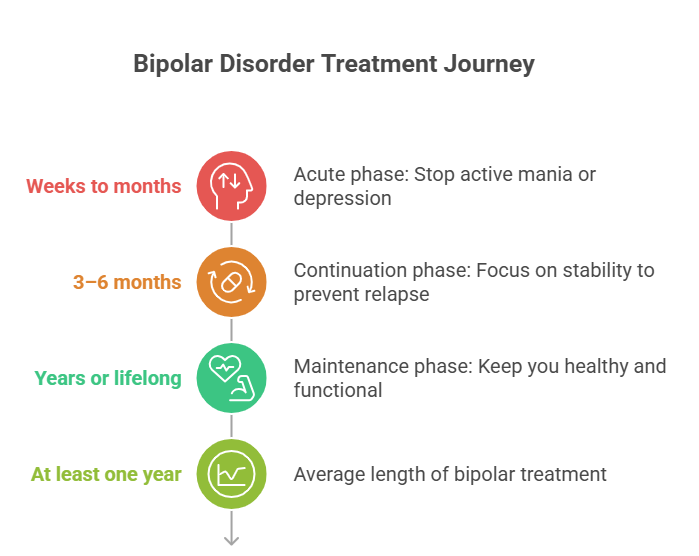
- Acute phase: This phase lasts weeks to months to stop active mania or depression.
- Continuation phase: We focus on stability for 3–6 months to prevent immediate relapse.
- Maintenance phase: This stage lasts years or lifelong to keep you healthy and functional.
- Average length of bipolar treatment: Most clinical practices suggest at least one year of consistent monitoring.
- Bipolar I vs. II: Type I often requires longer acute care due to the intensity of manic episodes.
We reinforce that personalized mental health treatment plans determine your exact bipolar disorder maintenance duration. Your success relies on a strategy built specifically for your body and mind.
Phases of Bipolar Disorder Treatment
We utilize a phased approach to transition you safely from a crisis to long-term wellness. You begin with frequent, high-intensity support to gain control over disruptive mood shifts. We then move you into less frequent sessions as you master your coping mechanisms. This gradual step-down ensures you never feel overwhelmed as you return to your normal life.
Monitoring and adjustments play a huge role in how we manage these phases. We watch for small changes in your sleep or energy to keep your plan updated. This proactive stance is a hallmark of the how we treat philosophy at our center.
| Phase | Duration | Goal | Treatment Approach |
| Acute | 2–8 Weeks | Symptom Control | High-frequency therapy |
| Continuation | 3–6 Months | Stability | Skill building & Support |
| Maintenance | Years/Lifelong | Prevention | Monthly check-ins |
How Long to Stay on Medication for Bipolar Disorder
Medication serves as a core component of long-term management for nearly all our clients. We discuss the bipolar disorder treatment medication needs early in your journey to set expectations. Most patients benefit from staying on medication indefinitely to shield their brain from toxic mood swings. We find that consistent medication use is the best way to maintain your career and family life.
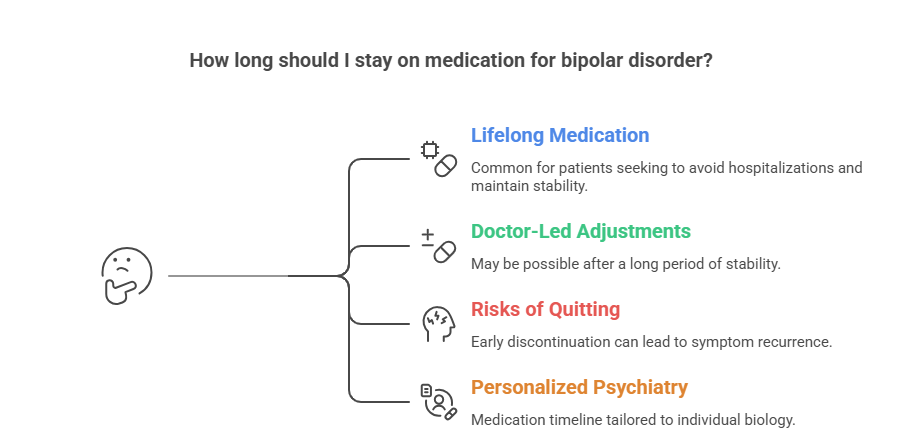
- Lifelong medication: This is common for patients who want to avoid recurring hospitalizations.
- Doctor-led adjustments: We may reduce doses after you achieve a long period of total stability.
- Risks of quitting: Stopping early often leads to a rapid return of severe symptoms.
- Personalized psychiatry: We tailor your medication timeline for bipolar disorder to your biology.
We emphasize that any decision regarding how long to stay on medication for bipolar disorder must be medical. Our dedicated recovery team monitors your medication timeline for bipolar disorder to ensure safety and effectiveness.
Factors That Influence Bipolar Disorder Treatment Duration
Several variables can lengthen or shorten your bipolar disorder treatment duration over time. We look at factors like early diagnosis and the presence of substance use disorders. We also consider mood disorder treatment history and how you have responded to care in the past. Adhering to your schedule is the fastest way to reach the maintenance phase.
We also use modern insights that many competitors miss, such as lifestyle medicine. We help you stabilize your circadian rhythms to improve your sleep and mood. Using telepsychiatry and monitoring apps allows us to keep you on track even during busy weeks. These tools are vital for effective mental health treatment plans in a fast-paced city like Atlanta.
FAQs
How long does bipolar treatment last on average?
Most people spend 6 to 12 months in active treatment before moving to a lower-frequency maintenance stage.
Can bipolar disorder be cured or only managed?
It is a chronic condition that we manage effectively through therapy and medication. You can live a full, symptom-free life with the right plan.
How long should you stay on bipolar medication?
Most guidelines suggest staying on medication for several years after your last episode. Many people continue indefinitely to prevent future crises.
What happens if treatment is stopped early?
Stopping care early significantly increases your chance of a severe relapse and possible hospitalization.
Does early treatment reduce bipolar disorder treatment duration?
Yes, seeking help at the first sign of symptoms often leads to a much faster stabilization period.
Long-Term Outlook and Recovery
We know that consistent care leads to stability and a much higher quality of life. You can achieve your personal goals while managing a depression treatment or bipolar plan. Long-term management protects your brain and keeps your relationships healthy over the years. We believe that recovery is absolutely possible with a dedicated team by your side.
If you struggle with anxiety treatment or PTSD & trauma treatment, we are here to help. We also offer emotional dysregulation & anger management to support your total wellness. Reach out to us today to start your journey toward a steadier future.
Contact Perimeter Treatment Center:
- Phone: 404-383-7826
- Email: help@perimeterdetox.com
- Website: https://perimetertx.com/