
Teenagers today navigate a complex world of digital stress and academic pressure. We identify the core triggers and warning signs to help you support your child. Our Atlanta experts explain biological, social, and environmental factors impacting youth. Discover effective ways to intervene early and promote lasting emotional wellness. At Perimeter Treatment Center, we provide the specialized care your family deserves.
Understanding Depression in Adolescence
Teenage mental health and depression represent a growing challenge for families in the Atlanta area. We see many young people struggling with the weight of modern expectations and digital isolation. Increasing screen time often replaces vital face-to-face connections and disrupts healthy sleep patterns. High academic pressure and constant social comparison create a perfect storm for emotional distress. We often find that a lack of support for these issues causes depression in teenage minds quite rapidly.
These shifts lead to significant depression in adolescence causes and effects that parents must recognize. We notice that prolonged stress often changes how a teenager processes daily interactions. Your teen may feel overwhelmed by responsibilities that once seemed manageable or simple. We focus on these trends at Perimeter Treatment Center to provide relevant and modern support for every family.
What Causes Depression in Teenage Individuals?
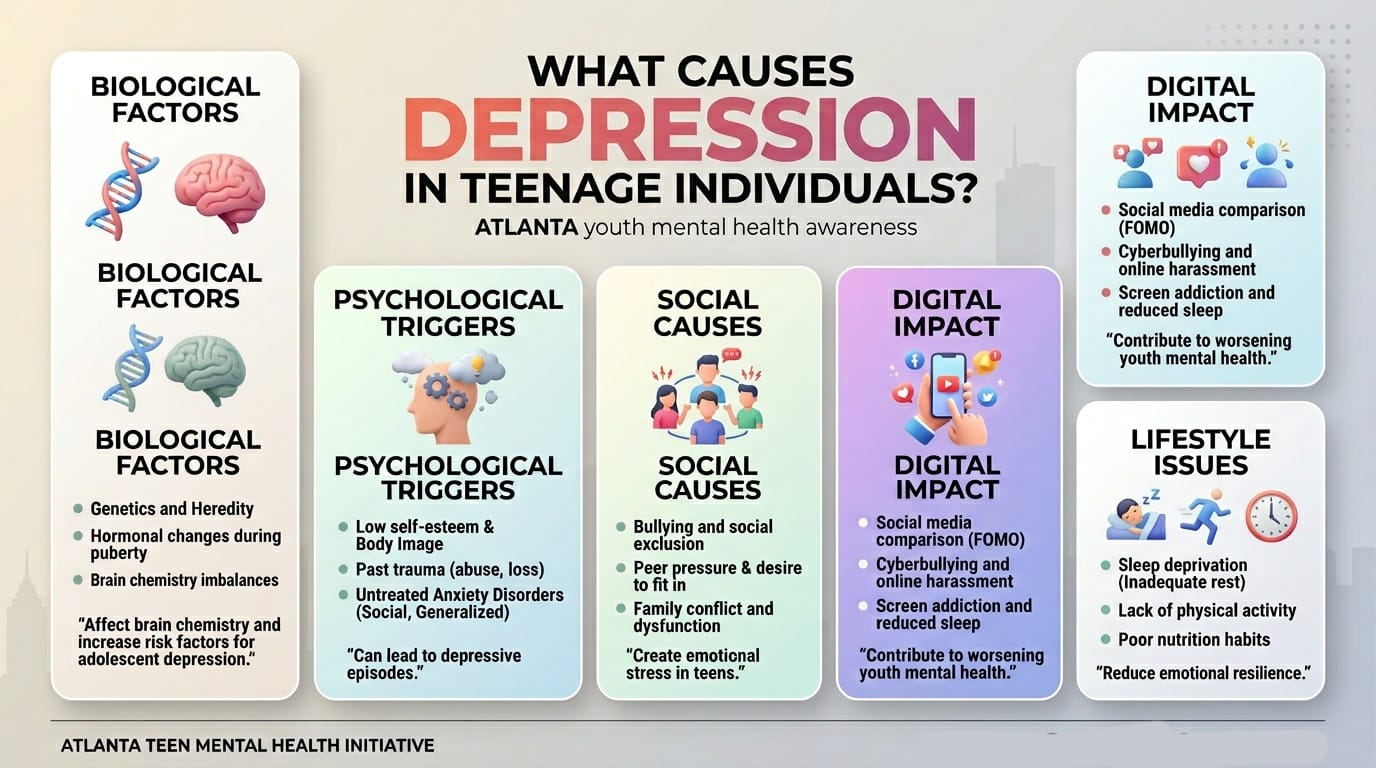
Identifying the core teenage depression causes and risk factors allows for a more targeted approach to healing. Most cases stem from a combination of internal biology and external pressures. We see many families in Atlanta struggling to understand what causes depression in teenage years.
- Biological factors: Genetics and hormonal shifts during puberty significantly impact brain chemistry and risk factors for adolescent depression.
- Psychological triggers: Low self-esteem, past trauma, or untreated anxiety often spark depressive episodes.
- Social causes: Frequent bullying, intense peer pressure, and family conflicts create emotional instability.
- Digital impact: Constant social media comparison and cyberbullying represent a major trending gap in youth mental health.
- Lifestyle issues: Chronic sleep deprivation and a lack of physical activity drain a teen’s emotional reserves.
When these factors overlap, they often intensify the visible teenage depression symptoms you see at home. We help you untangle these causes to find the root of the struggle. We believe that knowing what causes depression in teenage students is the first step toward recovery. Our dedicated recovery team uses ten years of experience to guide your family through these hurdles.
Teenage Depression Symptoms and Warning Signs
Emotional symptoms often serve as the first red flags for parents and educators. You might notice your teen experiencing persistent sadness or uncharacteristic irritability. They may express feelings of hopelessness or worthlessness during casual conversations. We find that sudden mood swings often mask a deeper need for professional emotional support.
Certain signs of depression in a teenager manifest through clear behavioral shifts. Your teen might withdraw from family dinners or stop hanging out with long-term friends. Some adolescents display misplaced anger or engage in risky behaviors to cope with their pain. We explain how we treat these behaviors by focusing on the underlying emotional cause.
Physical symptoms frequently accompany these emotional and behavioral changes. Many teens suffer from chronic fatigue even after resting for long periods. You may notice significant appetite changes or a total disruption of their normal sleep schedule. These physical markers are vital clues in identifying teenage depression symptoms early.
| Symptom Type | Examples |
| Emotional | Persistent sadness, mood swings, hopelessness |
| Behavioral | Isolation, loss of interest, risk-taking |
| Physical | Low energy, sleep problems, appetite changes |
Effects of Depression in Adolescence
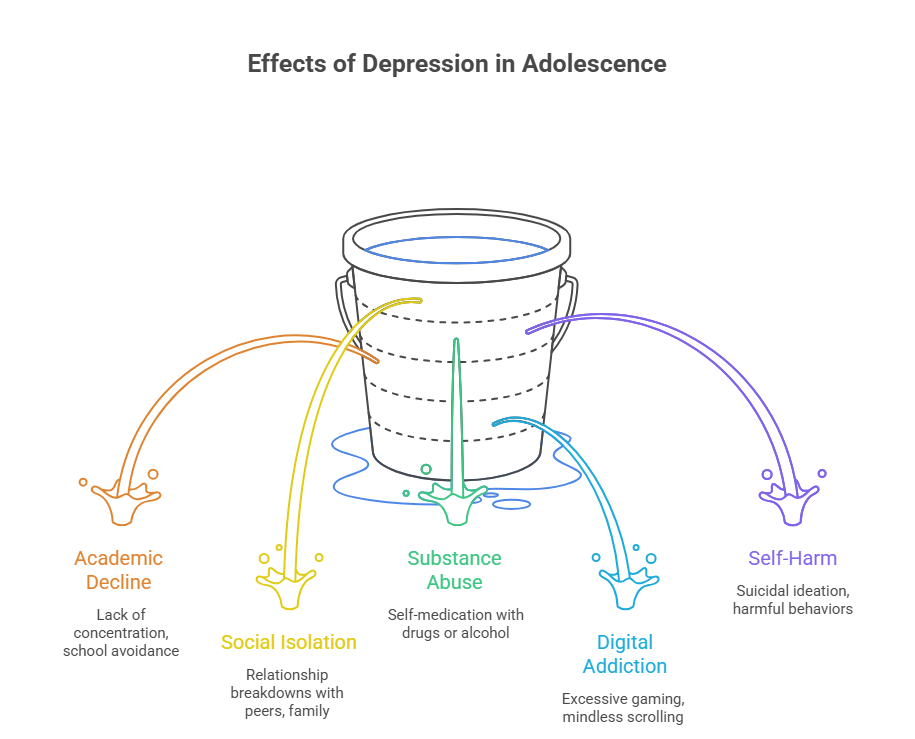
Understanding the long-term depression in adolescence causes and effects highlights the need for immediate action. Untreated depression ripples through every part of a young person’s life and future. We analyze how unchecked stress causes depression in teenage years to avoid long-term damage.
- Academic decline: A lack of concentration leads to falling grades and school avoidance.
- Social isolation: Teens often face relationship breakdowns with both peers and family members.
- Substance abuse: Many use drugs or alcohol to self-medicate, a risk often missed by many providers.
- Digital addiction: Emotional detachment frequently leads to excessive gaming or mindless scrolling.
- Self-harm: Intense emotional distress can raise the likelihood of suicidal ideation or harmful behaviors.
We emphasize that early diagnosis prevents these effects from becoming permanent life obstacles. Your quick response can stop the cycle of emotional detachment and academic failure. You can find more resources on these topics on our blog page.
Treatment for Teenage Depression
Effective treatment for teenage depression combines professional therapy with sustainable lifestyle changes. We often use talk therapy and medication-assisted support to stabilize a teen’s mood. Modern approaches also include online therapy and mental health apps to bridge the gap between sessions. These tools provide your teen with support exactly when they need it most.
Personalized care remains the most important factor in a successful recovery journey. We monitor progress closely to ensure the chosen treatment plan fits your teen’s evolving needs. We believe that a collaborative approach between experts and parents yields the best results.
How to Help a Teenager with Depression (FAQs)
What are the early signs of depression in a teenager?
Look for withdrawal from friends, a drop in grades, and persistent irritability. You might also notice changes in their eating or sleeping habits.
What are the main causes depression in teenage individuals?
Biology, social pressure, and digital stress are the primary drivers today. Traumatic life events or family history also play significant roles.
How can parents support teenage mental health and depression?
Listen without judgment and create a safe space for open communication. Seek professional help early to give your teen the best tools for recovery.
What is the best treatment for teenage depression?
A mix of specialized therapy and healthy lifestyle adjustments works best for most. We tailor our approach to meet the specific needs of your child.
Can teenage depression be prevented?
Building strong emotional awareness and maintaining healthy routines can reduce the risk. Early intervention at the first sign of struggle is the best prevention.
Prevention Tips for Teenage Depression
You can play a vital role in preventing severe mental health crises through proactive habits. Encourage your teen to maintain a healthy sleep schedule and limit late-night screen time. Building emotional awareness helps them process stress before it turns into a deeper depression. Open communication at home creates a foundation of trust and safety for your child.
Knowing how to help a teenager with depression starts with reaching out to experts. We empower Atlanta families with the knowledge and resources needed for mental wellness. If you notice your teen struggling, do not wait for the situation to worsen. Contact us to learn how we can support your teen’s journey back to happiness.
Perimeter Treatment Center
- Phone: 404-383-7826
- Email: help@perimetertx.com
- Contact Us: Atlanta Outpatient Support