
Trauma can affect how you think, sleep, react, and connect with others. You may feel tense, guarded, numb, or emotionally exhausted even when life looks stable from the outside. Trauma-informed therapy in Atlanta helps you feel safe before deeper emotional work begins. That matters because healing becomes harder when you feel overwhelmed or pressured.
Why Trauma-Informed Care Matters
Trauma is not only about what happened in the past. It is also about how your mind and body continue to respond in the present. You may stay alert long after danger has passed. You may avoid people, places, or memories that feel unsafe. Trauma-informed therapy in Atlanta focuses on safety, trust, emotional regulation, and steady progress, so healing feels manageable instead of rushed.
This approach helps you understand triggers, body responses, and coping patterns before deeper therapeutic work begins. For many adults, that creates a stronger foundation for recovery and daily stability.
What Is Trauma-Informed Therapy?
Trauma-informed therapy is a therapeutic approach that recognizes how trauma affects your emotions, behavior, nervous system, and sense of safety. It puts stability first and supports healing in a way that feels respectful, structured, and supportive.
This type of therapy often includes:
- Grounding techniques
- Emotional regulation skills
- Trigger awareness
- Stress response education
- Boundary-building support
- Safe pacing during treatment
These tools help reduce overwhelm and support long-term progress.
Signs You May Need Trauma Support
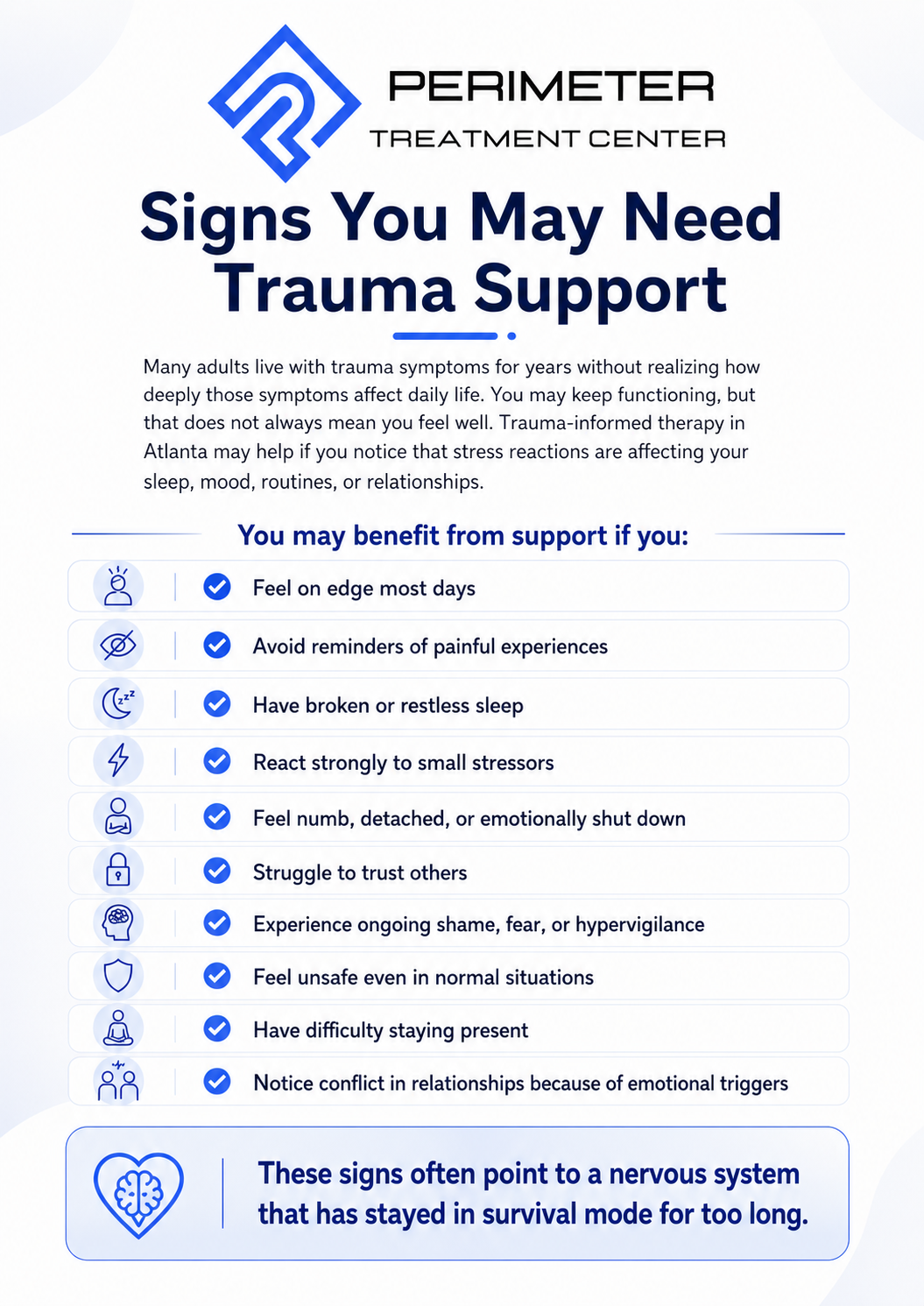
Many adults live with trauma symptoms for years without realizing how deeply those symptoms affect daily life. You may keep functioning, but that does not always mean you feel well. Trauma-informed therapy in Atlanta may help if you notice that stress reactions are affecting your sleep, mood, routines, or relationships.
You may benefit from support if you:
- Feel on edge most days
- Avoid reminders of painful experiences
- Have broken or restless sleep
- React strongly to small stressors
- Feel numb, detached, or emotionally shut down
- Struggle to trust others
- Experience ongoing shame, fear, or hypervigilance
- Feel unsafe even in normal situations
- Have difficulty staying present
- Notice conflict in relationships because of emotional triggers
These signs often point to a nervous system that has stayed in survival mode for too long.
How Trauma Can Affect Daily Life
Unresolved trauma often affects more than your emotions. It can disrupt your focus, energy, physical comfort, and sense of connection with others. You may find it harder to maintain routines, manage stress, or feel calm in situations that once felt normal.
| Area | What You May Notice | How Therapy Helps |
| Emotions | Fear, shame, numbness, irritability | Builds emotional awareness and regulation |
| Body | Tension, fatigue, poor sleep, restlessness | Teaches grounding and calming skills |
| Relationships | Trust issues, isolation, conflict | Improves communication and safety |
| Daily Life | Avoidance, burnout, low focus | Supports routine and stability |
| Stress Response | Panic, shutdown, overreaction | Helps you recognize and manage triggers |
When you understand how trauma affects your whole system, recovery starts to feel less confusing and more possible.
Trauma-Informed Therapy vs Traditional Therapy
Not every therapy experience feels safe for someone living with trauma symptoms. That is one reason trauma-informed therapy in Atlanta can be so valuable. It prioritizes emotional safety, collaboration, and trust before moving into deeper processing.
| Trauma-Informed Therapy | Traditional Therapy Without a Trauma Lens |
| Prioritizes safety and trust | May move too quickly into painful topics |
| Respects your pace | May feel rushed |
| Explains triggers and body responses | May focus only on thoughts or behavior |
| Builds coping tools first | May not prepare you for emotional overwhelm |
| Encourages choice and collaboration | May feel more provider-directed |
A trauma-informed approach does not avoid hard work. It simply makes that work safer and more sustainable.
Benefits of Outpatient Trauma Treatment
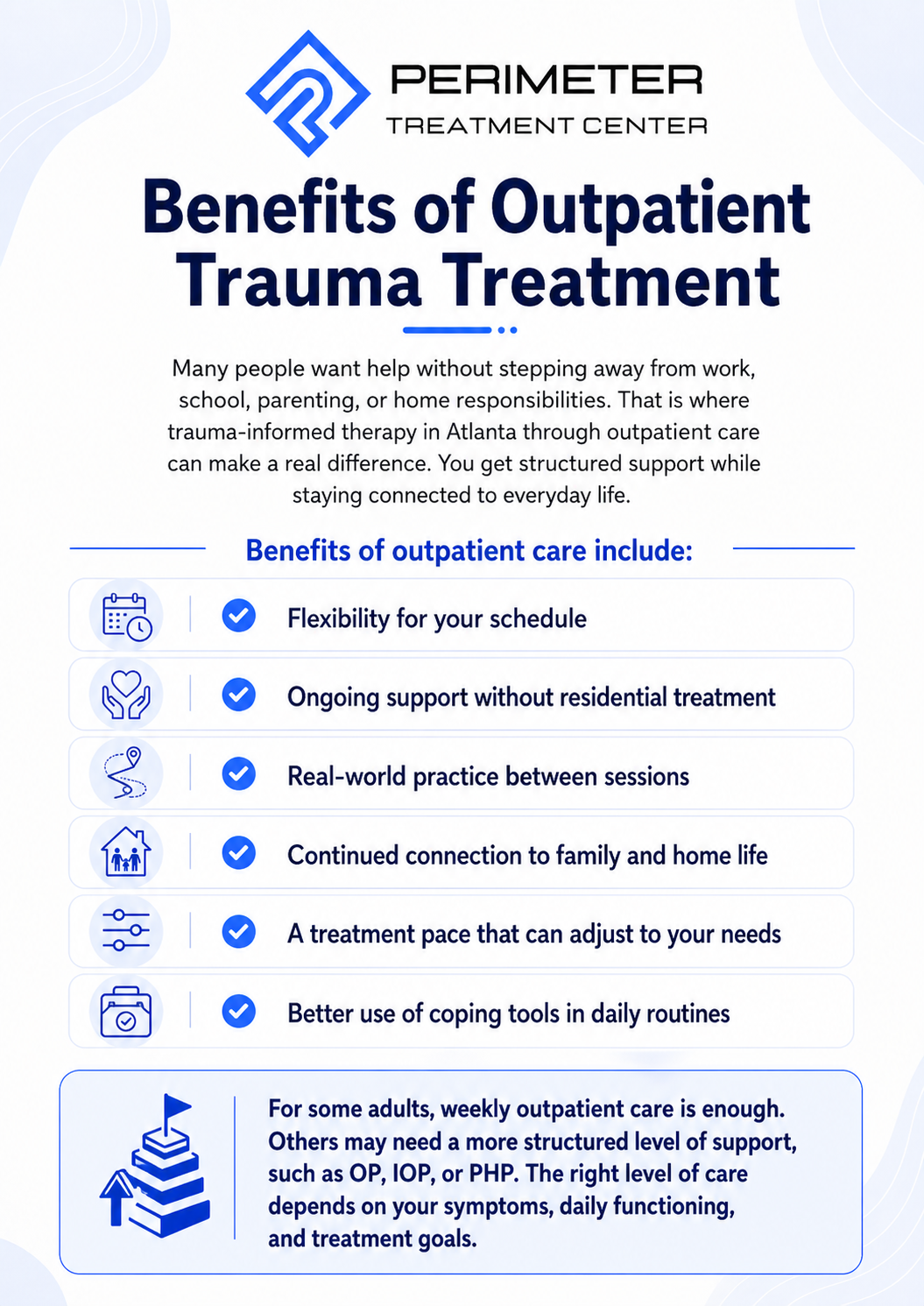
Many people want help without stepping away from work, school, parenting, or home responsibilities. That is where trauma-informed therapy in Atlanta through outpatient care can make a real difference. You get structured support while staying connected to everyday life.
Benefits of outpatient care include:
- Flexibility for your schedule
- Ongoing support without residential treatment
- Real-world practice between sessions
- Continued connection to family and home life
- A treatment pace that can adjust to your needs
- Better use of coping tools in daily routines
For some adults, weekly outpatient care is enough. Others may need a more structured level of support, such as OP, IOP, or PHP. The right level of care depends on your symptoms, daily functioning, and treatment goals.
What Safe Trauma Therapy Looks Like
Safe trauma therapy does not pressure you to relive everything at once. It starts by helping you feel grounded, informed, and respected. A strong program should help you understand how trauma affects the nervous system, identify triggers without shame, and build practical coping tools that protect your stability.
Good therapy should feel clear, supportive, and tailored to your needs.
How to Choose the Right Trauma Therapist
The right provider can make a major difference in how safe and effective treatment feels. When comparing therapists or treatment centers, look for experience with adult trauma, flexible levels of care, respectful communication, and a practical treatment plan. Trauma-informed therapy in Atlanta should never feel forced or confusing. You should feel heard, understood, and supported from the first conversation.
Why Early Support Matters
Trauma symptoms often become more disruptive when they go untreated. Sleep problems can worsen. Emotional reactivity can affect relationships. Avoidance can shrink your world. Stress can build until daily responsibilities feel harder than they should.
Early support does not mean you have to move fast. It means you do not have to stay stuck.
Frequently Asked Questions
What is trauma-informed therapy?
It is an approach that puts safety, trust, and emotional stability first. It helps you understand how trauma affects your mind, body, and daily life before moving into deeper healing work.
Who should consider trauma-informed care?
You may benefit if past experiences still affect your sleep, mood, focus, stress response, or relationships. It can also help when you feel emotionally shut down, easily triggered, or constantly on alert.
Is outpatient trauma treatment enough?
For many adults, yes. Outpatient care works well when you need support but can still manage daily responsibilities. Some people may need a higher level of care based on symptom severity and stability.
How long does trauma recovery take?
Recovery looks different for each person. Some people improve faster, while others need longer-term support. What matters most is steady progress and the right level of care.
How do I know if a therapist is the right fit?
You should feel respected, emotionally safe, and understood. A strong therapist will explain the process clearly, answer your questions, and support your pace.
Start Healing with Perimeter Treatment
You do not have to keep managing trauma symptoms on your own. At Perimeter Treatment, trauma-informed therapy in Atlanta can help you understand triggers, build coping skills, and move toward a more stable daily life. Call 404-383-7826, email , or visit perimetertx to learn more.