
Common Anxiety Triggers can affect your mind, body, sleep, work, and relationships. You may feel worried, tense, restless, or stuck in a loop of fear. Some anxiety triggers are easy to notice, while others hide under daily stress. When you understand your patterns, you can take better control of your response. At Perimeter Treatment Center, we help you find calm, clarity, and practical support in Atlanta.
Why Common Anxiety Triggers Can Feel So Hard to Control
Common Anxiety Triggers can feel confusing because they often show up before you understand what caused them. You may wake up with a tight chest, feel nervous before a meeting, or avoid a place that once felt normal. In our experience, many people blame themselves first. We do not see it that way. Anxiety often grows from stress, past pain, health worries, social pressure, or repeated fear patterns.
When you know your anxiety triggers, you can stop guessing and start responding with care. This does not mean you will never feel anxious again. It means you can learn what sets off your symptoms and what helps you feel safer. Mental health therapy can help you notice your thoughts, body signals, and coping habits. With the right support, you can build a plan that fits your life instead of forcing yourself through every hard moment alone.
What Are the Most Common Anxiety Triggers?
Anxiety triggers are situations, thoughts, memories, or body feelings that start or increase anxious reactions. You may notice a fast heartbeat, racing thoughts, sweating, stomach upset, or a strong urge to escape. I often see clients feel relieved when they learn that anxiety has patterns. Once you name the pattern, you can work with it more clearly.
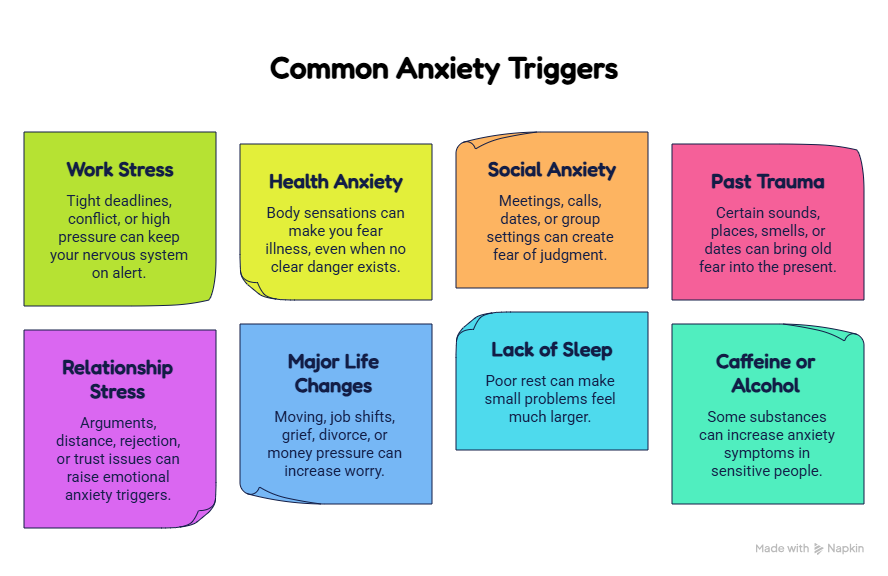
Common Anxiety Triggers may include:
- Work Stress: Tight deadlines, conflict, or high pressure can keep your nervous system on alert.
- Health Anxiety: Body sensations can make you fear illness, even when no clear danger exists.
- Social Anxiety: Meetings, calls, dates, or group settings can create fear of judgment.
- Past Trauma: Certain sounds, places, smells, or dates can bring old fear into the present.
- Relationship Stress: Arguments, distance, rejection, or trust issues can raise emotional anxiety triggers.
- Major Life Changes: Moving, job shifts, grief, divorce, or money pressure can increase worry.
- Lack of Sleep: Poor rest can make small problems feel much larger.
- Caffeine or Alcohol: Some substances can increase anxiety symptoms in sensitive people.
These causes of anxiety triggers can overlap. You may have more than one trigger at the same time. That is why therapy for anxiety works best when it looks at your whole life, not just one symptom.
How Anxiety Attack Triggers Affect Your Mind and Body
Anxiety attack triggers can make your body react as if danger is near. Your heart may race, your breathing may change, and your muscles may tighten. You may also feel dizzy, shaky, hot, cold, or detached from the moment. These symptoms can feel scary, yet they often come from your body’s alarm system.
Your thoughts can add fuel to the reaction. You may think, “Something is wrong with me,” or “I cannot handle this.” That fear can make the anxiety stronger. In anxiety therapy, we help you slow this cycle. We look at what happened before the attack, what you felt, and how you responded.
| Trigger Type | How It May Feel | Helpful First Step |
| Health anxiety | Fear about symptoms or illness | Track facts before assuming danger |
| Social anxiety | Fear of embarrassment or judgment | Practice small, safe social steps |
| Work stress | Racing thoughts and tension | Break tasks into smaller actions |
| Trauma reminders | Fear that feels sudden or intense | Use grounding skills and support |
| Sleep loss | Irritability and stronger worry | Build a steady rest routine |
When you understand your anxiety attack triggers, you can respond with more patience. You do not have to fight every feeling. You can learn to notice it, name it, and choose your next step.
How Mental Health Therapy Helps You Manage Anxiety Triggers
Mental health therapy gives you a safe place to understand your anxiety triggers without shame. You can talk through your fears, habits, past experiences, and current stress. We use a practical approach because you need tools that work in real life, not only in a therapy room.
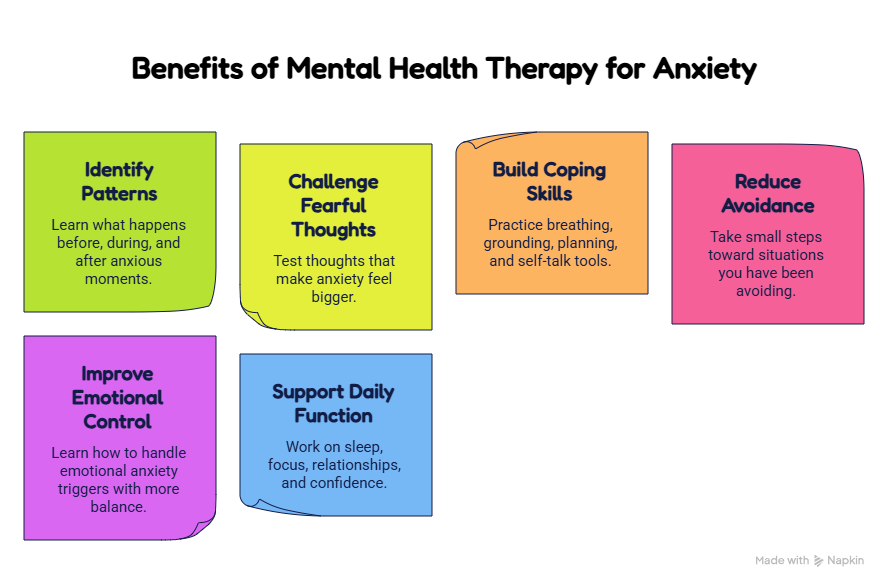
Therapy for anxiety may help you:
- Identify Patterns: You learn what happens before, during, and after anxious moments.
- Challenge Fearful Thoughts: You test thoughts that make anxiety feel bigger.
- Build Coping Skills: You practice breathing, grounding, planning, and self-talk tools.
- Reduce Avoidance: You take small steps toward situations you have been avoiding.
- Improve Emotional Control: You learn how to handle emotional anxiety triggers with more balance.
- Support Daily Function: You work on sleep, focus, relationships, and confidence.
An anxiety therapist can help you choose the right level of care. Some people do well with outpatient therapy. Others need more structure through IOP, OP, or a partial hospitalization program. At Perimeter Treatment Center, we help you understand what level fits your needs, symptoms, and goals in Atlanta.
When Should You Talk to an Anxiety Therapist?
You should talk to an anxiety therapist when anxiety starts shaping your choices, mood, sleep, or relationships. You may avoid calls, cancel plans, overthink health symptoms, or feel tense most days. You may also feel tired from trying to look fine while feeling overwhelmed inside. That is a common pain point we hear from people who delay care.
Support can help before anxiety feels unmanageable. You do not need to wait for a crisis. In our opinion, early help often makes recovery smoother because you can learn coping skills before patterns get deeper. Anxiety therapy can also help if you deal with depression, trauma, mood disorders, or emotional dysregulation. The right care helps you understand the root causes of anxiety triggers while giving you tools for daily relief.
FAQs About Common Anxiety Triggers
1. What are Common Anxiety Triggers?
Common Anxiety Triggers are thoughts, situations, body feelings, or memories that increase anxiety. They may include stress, social pressure, health worries, trauma reminders, sleep problems, or conflict. Your triggers may look different from someone else’s, so personal awareness matters.
2. What are the most common anxiety attack triggers?
Anxiety attack triggers often include sudden stress, crowded places, health fears, conflict, caffeine, poor sleep, or past trauma reminders. Sometimes the trigger feels unclear because anxiety can build slowly. A therapist can help you track patterns and understand what starts the cycle.
3. Can health anxiety cause physical symptoms?
Health anxiety can make you notice body feelings more closely. This can increase worry, tension, checking, and fear about illness. Therapy can help you separate real medical needs from anxiety-driven fear, while still taking your health seriously.
4. How can therapy for anxiety help with triggers?
Therapy for anxiety helps you identify triggers, understand your reactions, and build healthier coping skills. You can learn how to challenge fear-based thoughts and reduce avoidance. Over time, you may feel more confident in situations that once felt overwhelming.
5. When should I seek mental health therapy for anxiety?
You should seek mental health therapy when anxiety affects your daily life, sleep, work, school, health worries, or relationships. You should also get help if you feel stuck in panic, avoidance, or constant overthinking. Early support can help you regain control before symptoms grow stronger.
Get Help for Anxiety Triggers in Atlanta
Common Anxiety Triggers can make daily life feel heavy, but you do not have to manage them alone. At Perimeter Treatment Center, we help you understand your anxiety, build coping skills, and find the right care level for your needs. We support clients through mental health services and programs in Atlanta, including anxiety treatment, therapy options, IOP, OP, and PHP care.
If you feel ready to take the next step, we are here to help you move forward with care and respect. Contact Perimeter Treatment Center today to talk about anxiety therapy and support in Atlanta. Call 404-383-7826 or email help@perimeterdetox.com to connect with our team and learn which option may fit your needs.