You may feel overwhelmed but unsure if it is stress or something deeper. An anxiety symptoms checklist helps you identify early warning signs clearly. We often see people confuse daily stress with anxiety-related conditions. Mental health awareness is growing, and self-check tools are trending. In this guide, you will learn symptoms, triggers, and what steps to take next.
What Is Anxiety and Why Does It Happen?
Anxiety is your body’s natural response to pressure or fear. You may feel nervous before a big event. That is normal. But anxiety disorder symptoms go beyond temporary stress. They last longer and affect your daily life. You may struggle with focus, sleep, or relationships. We often see clients in Atlanta ignore early signs until symptoms worsen.
Anxiety develops from both biological and environmental causes. Your brain chemistry plays a role. Life experiences also matter. Today, digital stress is a growing issue. Social media comparison increases pressure. Burnout is common in busy Atlanta lifestyles. Understanding stress vs anxiety symptoms helps you recognize when your condition needs attention.
Common Causes and Triggers of Anxiety
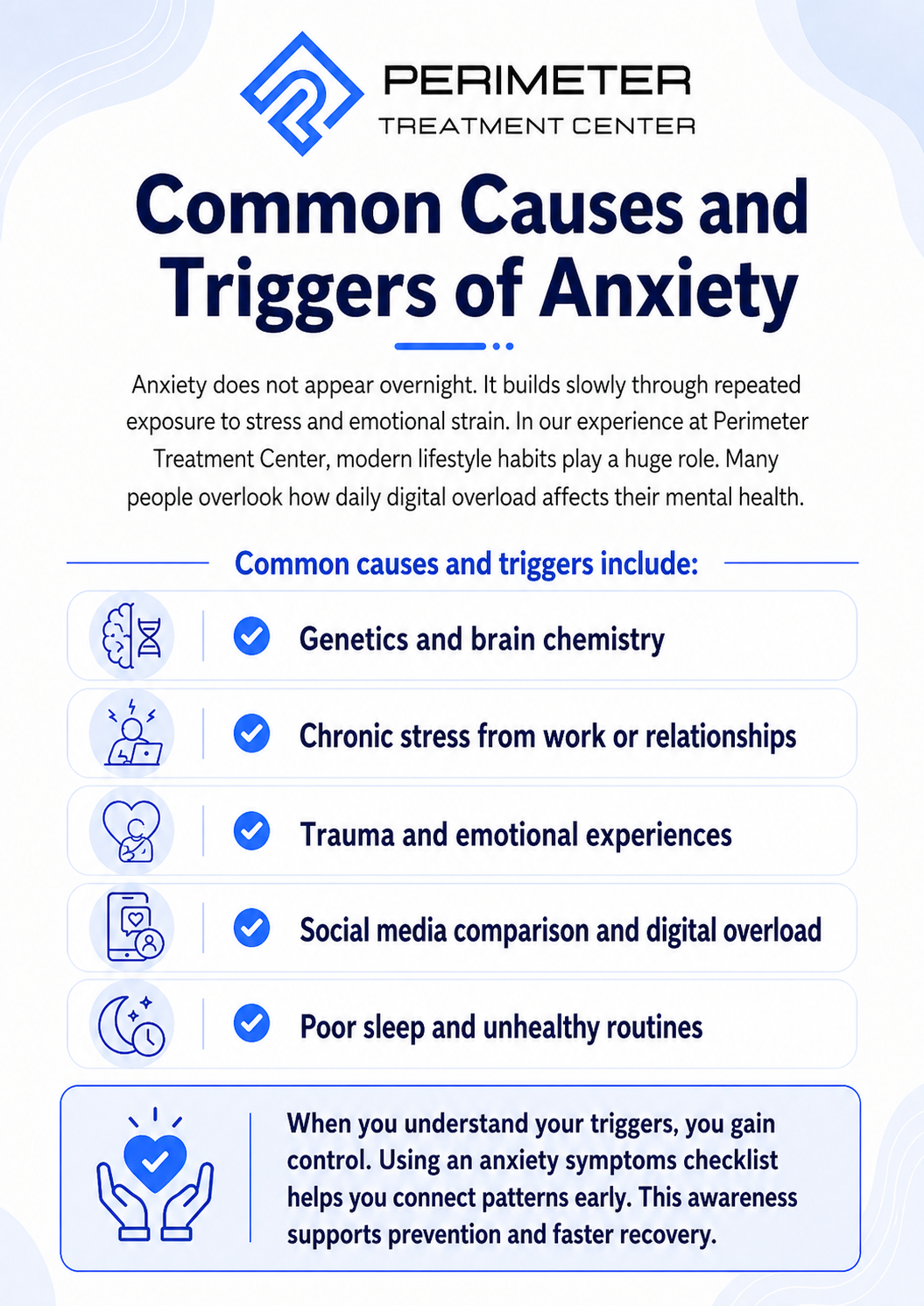
Anxiety does not appear overnight. It builds slowly through repeated exposure to stress and emotional strain. In our experience at Perimeter Treatment Center, modern lifestyle habits play a huge role. Many people overlook how daily digital overload affects their mental health.
- Genetics and brain chemistry
- Chronic stress from work or relationships
- Trauma and emotional experiences
- Social media comparison and digital overload
- Poor sleep and unhealthy routines
When you understand your triggers, you gain control. Using an anxiety symptoms checklist helps you connect patterns early. This awareness supports prevention and faster recovery.
Types of Anxiety Symptoms You Shouldn’t Ignore
Anxiety shows up in different ways. Many people in Atlanta report physical discomfort first. You may notice panic attack symptoms like a racing heart or shortness of breath. Sweating and dizziness are also common. These symptoms can feel intense and scary.
Emotional symptoms often follow. You may experience constant worry or fear. Overthinking becomes hard to control. These are common signs of anxiety. You might feel restless or unable to relax, even during calm moments.
Behavioral changes are another warning sign. You may avoid social events or responsibilities. Isolation becomes more frequent. These are clear anxiety disorder symptoms that impact your daily life.
| Type | Symptoms | Example |
| Physical | Rapid heartbeat, sweating | Panic attacks |
| Emotional | Fear, worry | Overthinking |
| Behavioral | Avoidance, restlessness | Social withdrawal |
Complete Anxiety Symptoms Checklist (Self-Assessment Guide)
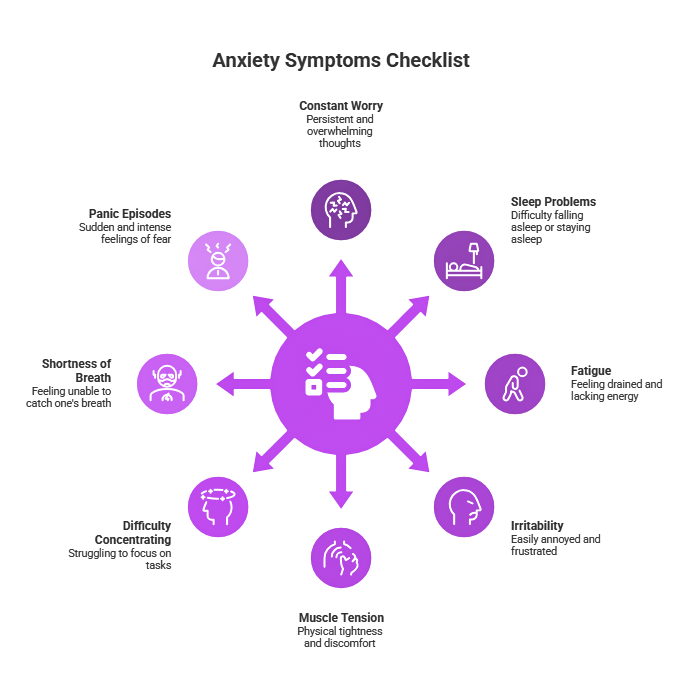
You need a clear system to track how you feel. That is where an anxiety symptoms checklist becomes useful. Many people now use self-assessment tools and AI-based tracking to monitor mental health patterns. We encourage this approach for early awareness.
- Constant worry or racing thoughts
- Sleep problems or insomnia
- Fatigue or low energy
- Irritability
- Muscle tension
- Difficulty concentrating
- Shortness of breath
- Panic episodes
This works like a mental health symptoms checklist or even an anxiety test checklist. However, it is not a diagnosis. You should use it to track patterns over time. We often see overlap between depression and anxiety symptoms, which makes professional evaluation important.
Stress vs Anxiety Symptoms: Key Differences
Stress usually comes from a specific situation. It is short-term and often goes away once the issue is resolved. Anxiety feels different. It stays longer and may not have a clear cause. It builds internally and affects your thoughts daily.
Understanding stress vs anxiety symptoms helps you make better decisions. Stress feels manageable, while anxiety becomes overwhelming. Anxiety affects your sleep, focus, and emotional control. If symptoms last longer or disrupt your life, it is time to seek professional support.
FAQs About Anxiety Symptoms Checklist
- What is an anxiety symptoms checklist?
It is a tool that helps you track anxiety symptoms. You can identify patterns and understand your mental state better. - Can a checklist diagnose anxiety?
No. Only licensed professionals can diagnose conditions. A checklist supports awareness, not diagnosis. - What are common signs of anxiety?
Common signs include worry, fatigue, and panic attack symptoms. These symptoms vary from person to person. - How is anxiety different from stress?
Stress is short-term. Anxiety lasts longer. Understanding stress vs anxiety symptoms helps you take action early. - When should I seek professional help?
You should seek help if symptoms become frequent or affect your daily life. Early support leads to better outcomes.
Take the Next Step Toward Better Mental Health
If your checklist shows repeated symptoms, do not ignore them. You deserve clarity and support. We have helped many individuals in Atlanta regain control of their mental health. You are not alone in this journey.
At Perimeter Treatment Center, we provide personalized care for anxiety and related conditions. Our team offers expert therapy and structured support programs. Explore our anxiety treatment or learn how we treat to start your recovery.
Take action today. Call us at 404-383-7826 or email help@perimeterdetox.com. You can also visit our contact page to schedule your consultation.