
Understanding the Difference between habit & addiction can help you know when a behavior needs more support. A habit may feel routine, but addiction often feels hard to control.
You may repeat a behavior even when it hurts your health, mood, work, or relationships. We help you look at the pattern without shame or judgment. With the right care, you can understand your triggers and build healthier choices.
What Is the Difference Between Habit & Addiction?
The Difference between habit & addiction often starts with control. A habit is a repeated action that fits into your life. You may bite your nails, check your phone, snack at night, or scroll before bed. These patterns can feel automatic, but you can usually pause them when you need to. A habit may annoy you, yet it does not always damage your daily life.
Addiction works differently because it can take over your choices. You may feel pulled toward a behavior even when you promised yourself you would stop. You may hide it, defend it, or feel guilt after it happens. In our clinical experience, many people first notice the problem when the behavior affects sleep, money, focus, work, or trust with loved ones. That is when addiction counseling or addiction therapy can help you understand the deeper cycle.
Habit vs Addiction: Signs You Should Pay Attention To
When you compare habit vs addiction, look at how much power the behavior has over your day. A habit may happen often, but addiction creates pressure, cravings, and consequences. You may feel anxious until you repeat the behavior. You may also feel short relief, then regret soon after.
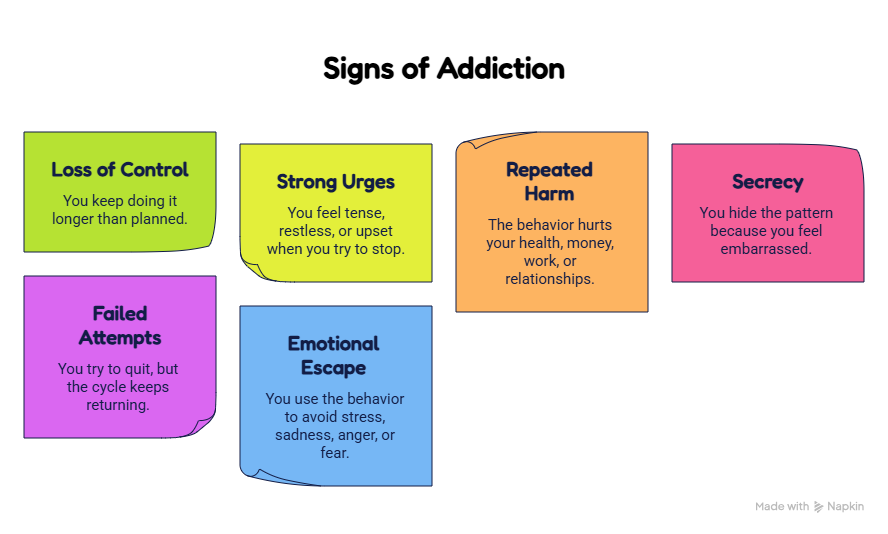
Common signs include:
- Loss of control: You keep doing it longer than planned.
- Strong urges: You feel tense, restless, or upset when you try to stop.
- Repeated harm: The behavior hurts your health, money, work, or relationships.
- Secrecy: You hide the pattern because you feel embarrassed.
- Failed attempts: You try to quit, but the cycle keeps returning.
- Emotional escape: You use the behavior to avoid stress, sadness, anger, or fear.
We often tell clients that shame does not fix addiction. Clear support does. When you understand the reason behind the behavior, you can start building a safer plan. Therapy for addictive behaviors gives you tools, structure, and steady guidance.
Why Some Habits Turn Into Behavioral Addiction
A habit can grow into behavioral addiction when your brain connects the behavior with quick relief. For example, you may shop after a stressful day. At first, it feels harmless. Over time, your brain may start asking for that same relief whenever stress returns. You may not notice the shift right away. The behavior may seem normal until it starts creating problems. In our work, we often see this pattern with gambling, gaming, shopping, pornography, food-related behaviors, phone use, and compulsive online activity.
The key issue is not the behavior alone. The key issue is the relationship you have with it.
| Area to Check | Habit | Addiction |
| Control | You can stop with effort | You struggle to stop |
| Emotional pull | Mild urge | Strong craving or pressure |
| Impact | Low daily damage | Work, mood, money, or relationships suffer |
| Secrecy | Usually open | Often hidden or minimized |
| Support needed | Self-awareness may help | Therapy may be needed |
A behavior becomes more serious when it controls you more than you control it. That is where behavioral addiction therapy can make a real difference.
How Therapy Helps You Break Addictive Behavior Patterns
Therapy helps you understand what the behavior is doing for you. Many addictive patterns do not start because you are weak. They often start because your mind wants relief from stress, loneliness, trauma, anxiety, depression, or emotional pain. We focus on the root problem, not just the outside habit.
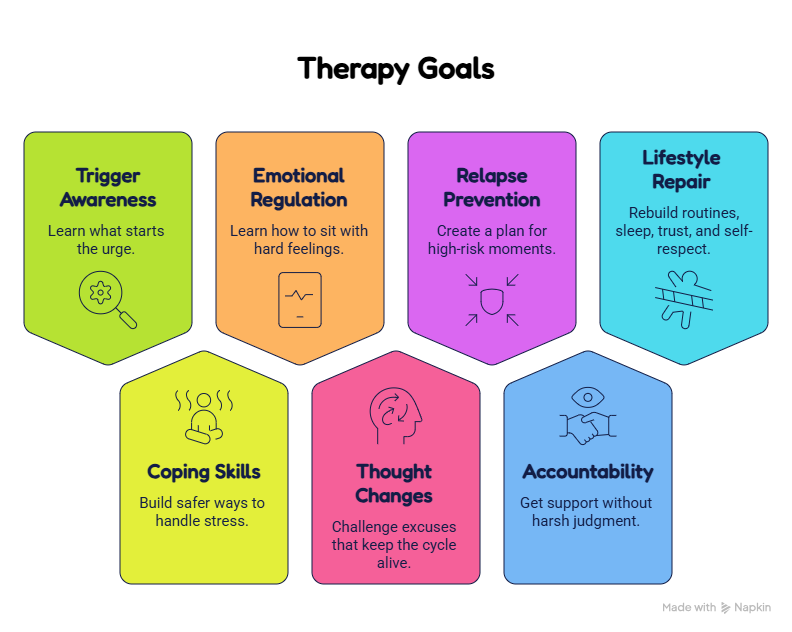
Helpful therapy goals may include:
- Trigger awareness: You learn what starts the urge.
- Coping skills: You build safer ways to handle stress.
- Emotional regulation: You learn how to sit with hard feelings.
- Thought changes: You challenge excuses that keep the cycle alive.
- Relapse prevention: You create a plan for high-risk moments.
- Accountability: You get support without harsh judgment.
- Lifestyle repair: You rebuild routines, sleep, trust, and self-respect.
In our expert opinion, lasting change works best when you treat both the behavior and the pain behind it. Compulsive behavior therapy gives you space to talk honestly. It also gives you practical steps you can use outside each session. At Perimeter TX, we may connect your needs with outpatient care, IOP, PHP, or mental health treatment when a higher level of support fits your situation.
When Should You Talk to an Addiction Therapist?
You should talk to an addiction therapist when the behavior feels bigger than your willpower. You do not need to hit rock bottom. You only need to notice that the pattern keeps causing stress, harm, or fear. Getting help early can protect your health and your relationships.
We often meet people who say, “I thought I could stop anytime.” Then they realize the behavior returns during stress, conflict, boredom, or sadness. That moment matters. It shows that the behavior may be serving an emotional purpose. Addiction therapy can help you name that purpose and replace it with healthier tools. If anxiety, depression, PTSD, mood changes, or anger fuel the cycle, mental health treatment can support deeper healing. You deserve care that looks at your full life, not just one behavior.
FAQs About the Difference Between Habit & Addiction
1. What is the main difference between habit and addiction?
A habit is a repeated behavior that you can usually control. Addiction is harder to stop, even when it causes harm. The Difference between habit & addiction often shows up through cravings, secrecy, failed attempts to quit, and negative consequences.
2. Can a normal habit become an addiction?
Yes, a habit can become addictive when it turns into a main way to cope with stress or emotional pain. The risk grows when you feel unable to stop. Support can help you understand the pattern before it causes more damage.
3. What are common examples of behavioral addiction?
Common examples may include gambling, gaming, shopping, pornography, internet use, exercise, or other repeated behaviors. Not every repeated behavior is an addiction. The concern grows when the behavior harms your life and feels hard to control.
4. Does addiction therapy work for compulsive behaviors?
Yes, addiction therapy can help you understand triggers, cravings, thoughts, and emotions behind compulsive patterns. Therapy can also help you build safer coping skills. Many people improve when they get consistent support and a clear recovery plan.
5. When should I seek addiction counseling?
You should seek addiction counseling when a behavior creates guilt, secrecy, conflict, financial stress, health issues, or failed attempts to stop. You can also reach out if your loved ones feel worried. Early support can make recovery feel less overwhelming.
Get Support for Addictive Behaviors in Atlanta
If you see yourself in these signs, you do not have to handle it alone. We help you understand the Difference between habit & addiction with care, privacy, and respect. At Perimeter TX, we support adults in Atlanta through mental health treatment, outpatient care, IOP, PHP, and therapy-focused support.
You can take one honest step today. Contact Perimetertx to talk about your concerns and explore the right level of care for your needs. Call 404-383-7826 or email help@perimeterdetox.com. We are here to help you move toward clarity, control, and healthier daily choices.