
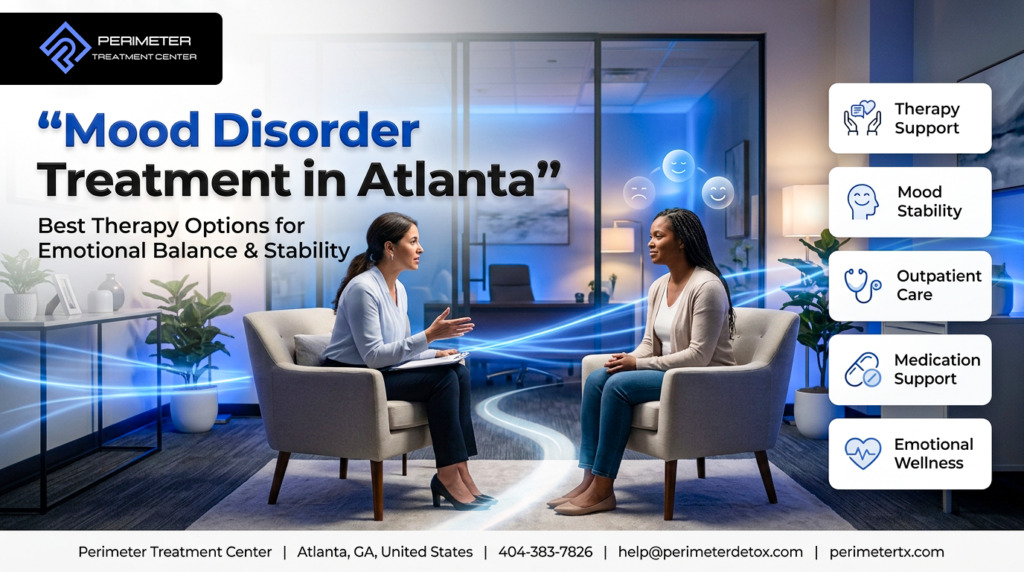
Mood changes can affect your work, relationships, sleep, and peace of mind. We understand that mood disorder treatment in Atlanta should focus on your personal symptoms, emotional triggers, and daily life challenges. Treatment may include therapy, coping skills, medication support, and structured mental health care. Knowing the best therapy options for mood disorders helps you choose the right path toward emotional balance, stability, and long-term recovery.
What Are Mood Disorders and Why Does Treatment Matter?
Mood disorders affect the way you feel, think, and function over time. You may notice lasting sadness, irritability, mood swings, or periods of low energy that disrupt daily life. This is more than a rough week. A mood disorder can affect work, relationships, sleep, and self-control. That is why early mood disorder treatment in Atlanta matters when symptoms stop feeling temporary.
These conditions can develop from brain chemistry, genetics, trauma, chronic stress, or untreated mental health issues. We also see social pressure, burnout, and poor sleep make symptoms harder to manage. Some people wait too long because they think mood changes will pass. The right care can help you understand triggers, stabilize emotions, and build healthier patterns with support that fits your routine.
Common Signs and Triggers You Should Not Ignore
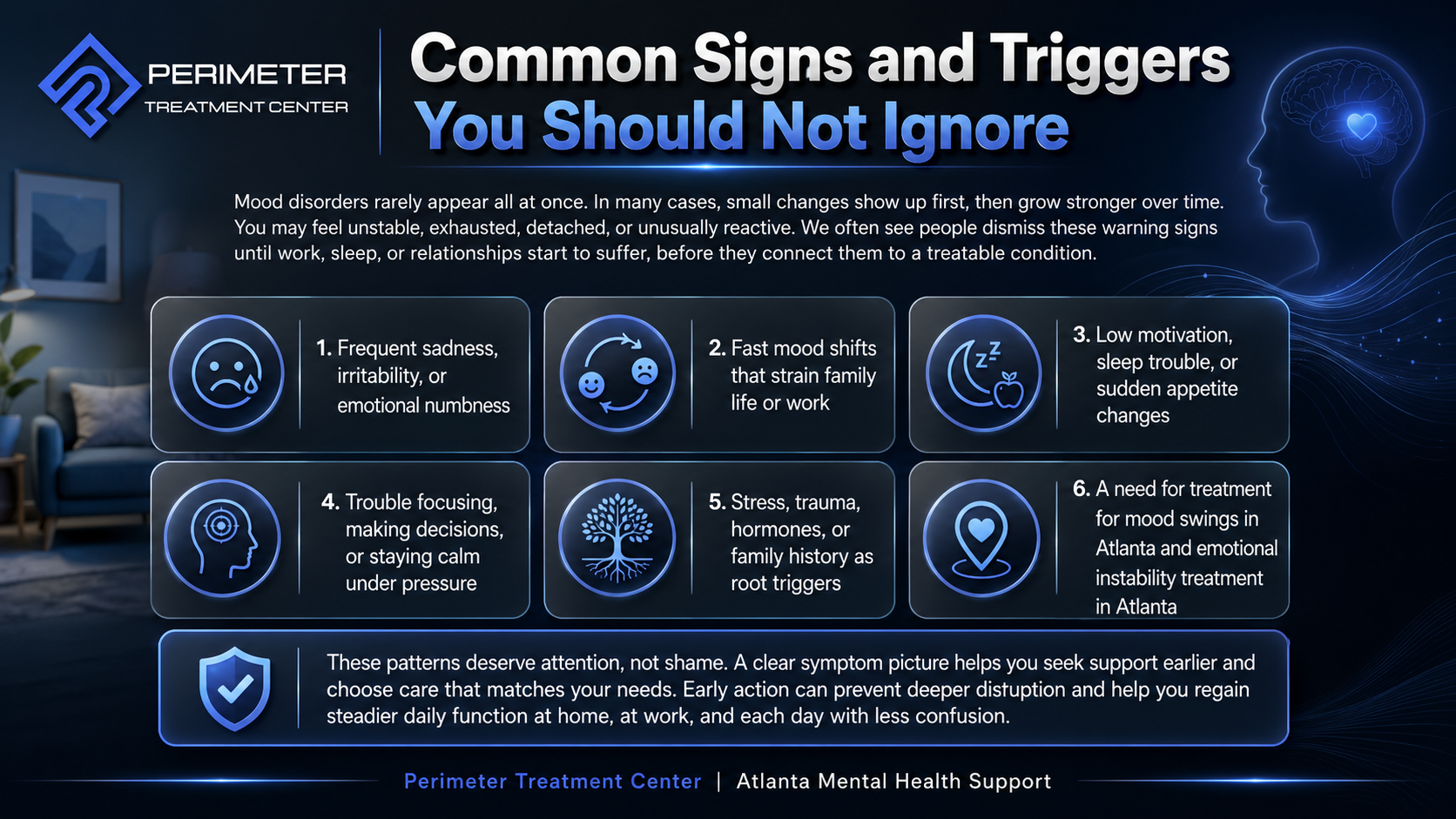
Mood disorders rarely appear all at once. In many cases, small changes show up first, then grow stronger over time. You may feel unstable, exhausted, detached, or unusually reactive. We often see people dismiss these warning signs until work, sleep, or relationships start to suffer, before they connect them to a treatable condition.
- Frequent sadness, irritability, or emotional numbness
- Fast mood shifts that strain family life or work
- Low motivation, sleep trouble, or sudden appetite changes
- Trouble focusing, making decisions, or staying calm under pressure
- Stress, trauma, hormones, or family history as root triggers
- A need for treatment for mood swings in Atlanta and emotional instability treatment in Atlanta
These patterns deserve attention, not shame. A clear symptom picture helps you seek support earlier and choose care that matches your needs. Early action can prevent deeper disruption and help you regain steadier daily function at home, at work, and each day with less confusion.
Best Therapy Options for Mood Disorders in Atlanta
The best treatment depends on your symptoms, history, and daily routine. Some people benefit from mood disorder therapy in Atlanta through weekly sessions that teach coping skills and emotional regulation. Others start with mood disorder counseling in Atlanta to better understand triggers, communication patterns, and behavior changes. Early therapy often improves insight and reduces conflict at home.
When symptoms affect work, parenting, or safety, more structure may help. An outpatient mood disorder program in Atlanta can provide therapy, support, and routine without removing you from daily life. This can be a strong option for people seeking adult mood disorder treatment in Atlanta who need more than occasional counseling but not inpatient care.
You should also look for a trusted mood disorder treatment center in Atlanta that offers personalized plans, not generic advice. The right provider can combine medication management, counseling, and therapy for mood imbalance in Atlanta, based on your symptoms. That approach helps you build steadier habits, stronger coping tools, and better long-term balance.
| Treatment Type | Best For | Example |
| Weekly Therapy | Mild to moderate symptoms | Coping skills and counseling |
| Outpatient Program | Ongoing mood instability | IOP or OP support |
| Integrated Care | Complex emotional patterns | Therapy plus medication review |
How to Choose the Right Treatment Path
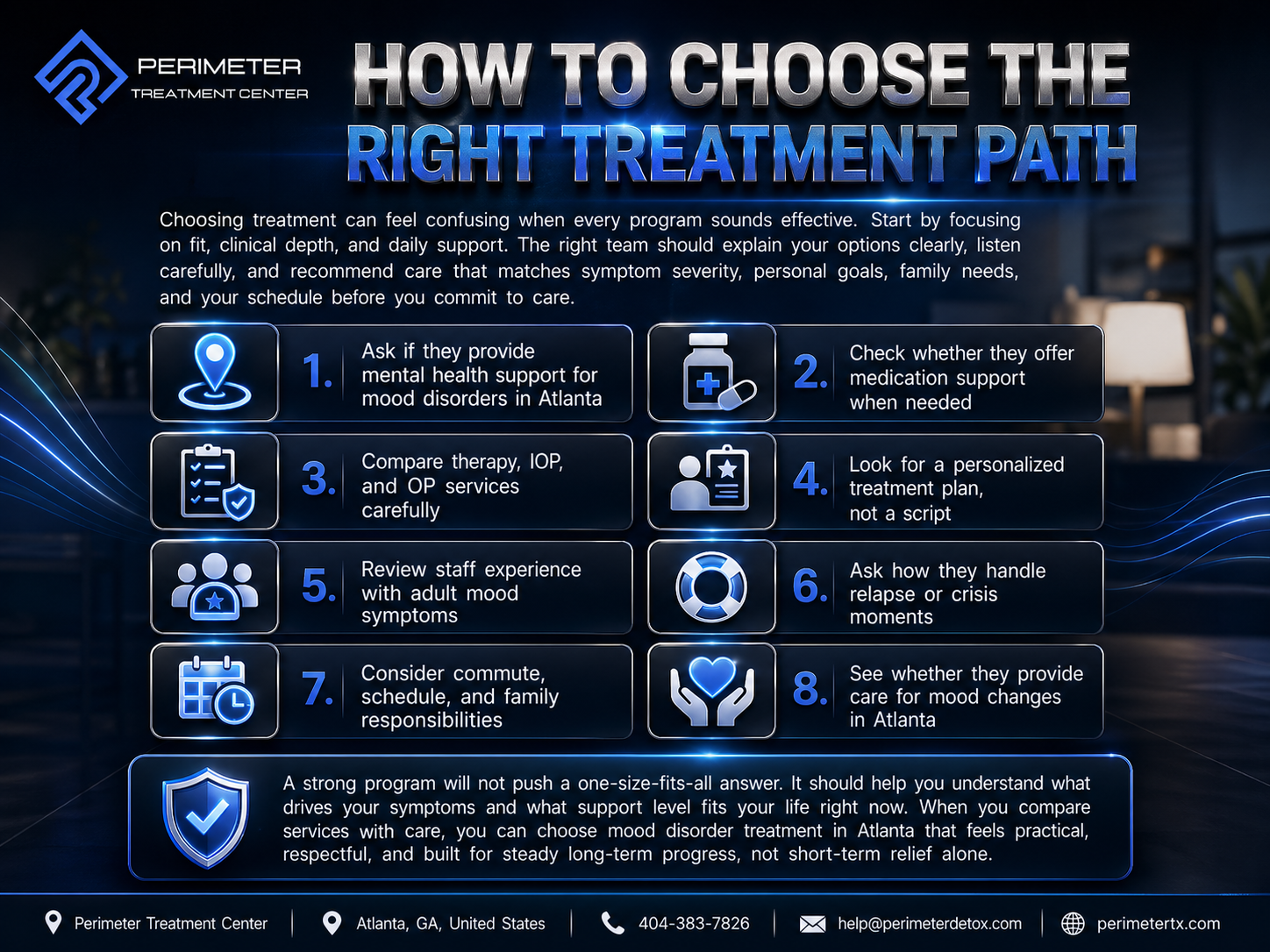
Choosing treatment can feel confusing when every program sounds effective. Start by focusing on fit, clinical depth, and daily support. We suggest looking beyond location alone. The right team should explain your options clearly, listen carefully, and recommend care that matches symptom severity, personal goals, family needs, and your schedule before you commit to care.
- Ask if they provide mental health support for mood disorders in Atlanta
- Check whether they offer medication support when needed
- Compare therapy, IOP, and OP services carefully
- Look for a personalized treatment plan, not a script
- Review staff experience with adult mood symptoms
- Ask how they handle relapse or crisis moments
- Consider commute, schedule, and family responsibilities
- See whether they provide care for mood changes in Atlanta
A strong program will not push a one-size-fits-all answer. It should help you understand what drives your symptoms and what support level fits your life right now. When you compare services with care, you can choose mood disorder treatment in Atlanta that feels practical, respectful, and built for steady long-term progress, not short-term relief alone.
Therapy-Only Care vs Outpatient Program Support
Therapy-only care can work well when symptoms are manageable, and your daily routine stays mostly stable. You meet with a clinician, build coping tools, and apply them between sessions. This approach helps many people who want consistent support without a larger schedule commitment. It can be a smart first step when symptoms are present but not overwhelming.
Outpatient program support offers more structure and more frequent care. It may fit better when mood swings affect work, relationships, or basic daily tasks. We often suggest this path when weekly counseling no longer feels enough. If you need closer support, an outpatient program can provide a stronger routine, more accountability, and faster feedback while you keep living at home.
FAQs About Mood Disorder Treatment in Atlanta
What is mood disorder treatment in Atlanta?
It includes therapy, counseling, medication support, and structured programs for people dealing with lasting mood symptoms. The goal is to improve emotional stability, daily function, and long-term coping.
When should you seek treatment for mood swings?
You should get help when mood swings affect sleep, work, relationships, or decision-making. Early care often prevents symptoms from becoming more disruptive.
What does mood disorder therapy help with?
Therapy helps you identify triggers, manage emotional reactions, and build healthier thought patterns. It can also improve communication, self-awareness, and daily routine.
Is outpatient treatment a good option for adults?
Yes, it can be a strong option when you need more support than weekly counseling. Many adults choose outpatient care because it offers structure without removing them from home or work.
How do you choose the right treatment center?
Look for licensed professionals, personalized care plans, and clear program options. A good center should explain your choices and help you feel understood from the start.
Take the Next Step Toward Better Emotional Balance
If your moods feel harder to manage, do not wait for things to get worse. You deserve answers, structure, and support that fit your life. We know that the right care can help you feel steadier, think more clearly, and rebuild confidence in your daily routine. Small steps now can create real progress over time.
At Perimetertx, we provide compassionate care for adults seeking mood support in Atlanta. Our team offers therapy and structured treatment through PHP, IOP, and OP services based on your needs. Call 404-383-7826, email help@perimeterdetox.com, or visit perimetertx to start your path toward lasting emotional balance.