
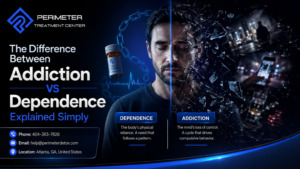
The Difference Between addiction vs dependence can feel confusing when you or someone you love struggles with substance use. You may notice withdrawal, cravings, mood changes, or risky behavior, yet you may not know what it means. Dependence often involves your body’s physical reaction, while addiction affects control, choices, and daily life. At Perimetertx, we help you understand these signs with care, respect, and clear guidance. When you know the difference, you can choose the right support sooner and with more confidence.
What Is the Difference Between Addiction vs Dependence?
The Difference Between addiction vs dependence starts with how each one affects your body, brain, and behavior. Dependence usually means your body has adapted to a substance. You may feel sick, shaky, anxious, restless, or uncomfortable when you stop using it. You may also need more of the substance to feel the same effect. These changes can happen with alcohol, drugs, or some medications, even when someone uses them for a medical reason.
Addiction goes deeper than physical adjustment. It often includes cravings, loss of control, and continued use even when life starts falling apart. In our experience, many people feel ashamed because they think dependence and addiction mean the same thing. They do not always mean the same thing. You may have signs of dependence without compulsive use, but addiction symptoms often include behavior patterns that hurt your health, work, family, and emotional stability.
Common Signs of Dependence You Should Notice Early
Dependence can start quietly, so you may not see the full problem at first. You may think your body simply “needs” alcohol, pills, or another substance to feel normal. Over time, those signs can grow and affect your mood, sleep, focus, and daily routine.
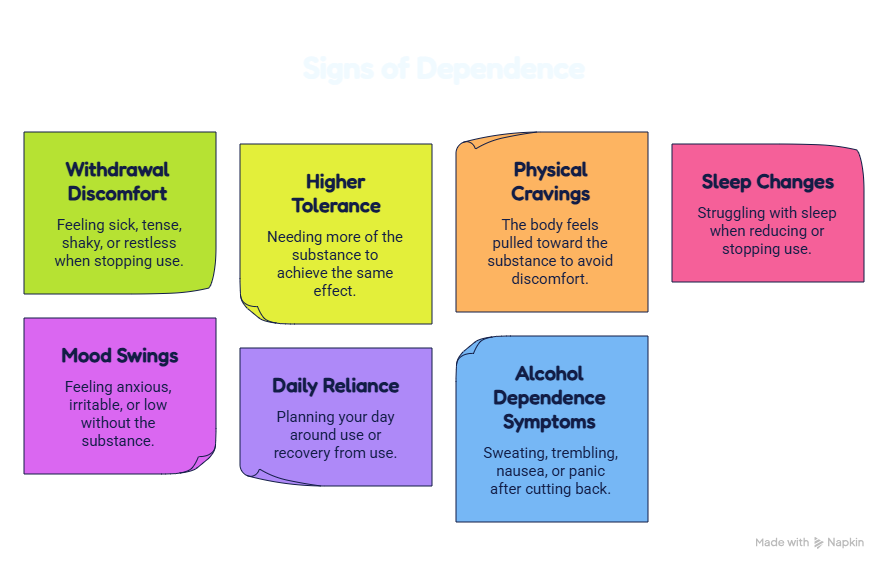
Common signs of dependence include:
- Withdrawal Discomfort: You feel sick, tense, shaky, or restless when you stop using.
- Higher Tolerance: You need more alcohol or substances to feel the same result.
- Physical Cravings: Your body feels pulled toward the substance to avoid discomfort.
- Sleep Changes: You struggle with sleep when you reduce or stop use.
- Mood Swings: You feel anxious, irritable, or low without the substance.
- Daily Reliance: You start planning your day around use or recovery from use.
- Alcohol Dependence Symptoms: You may sweat, tremble, feel nauseous, or feel panic after cutting back.
These signs of dependence do not mean you have failed. They mean your body may need help to reset safely. If withdrawal feels intense, you should never handle it alone. We recommend professional support because some withdrawal symptoms can become serious without care.
Addiction Symptoms and How They Affect Your Life
Addiction symptoms often show up through behavior, emotions, and decision-making. You may promise yourself that you will stop, yet you return to the same pattern. You may hide your use, miss duties, argue with loved ones, or keep using after clear harm.
Substance use disorder symptoms can affect your health, relationships, money, work, and self-respect. In our work with people facing these concerns, we often hear one painful sentence: “I do not feel like myself anymore.” That feeling matters. It can signal that substance use has moved from occasional use into a deeper cycle.
| Area of Life | Dependence May Look Like | Addiction May Look Like |
| Body | Withdrawal, tolerance, discomfort | Strong cravings with repeated use |
| Behavior | Using to feel normal | Using despite harm |
| Emotions | Anxiety when stopping | Shame, secrecy, guilt, or fear |
| Daily Life | Routine built around avoiding symptoms | Work, family, or health problems continue |
| Control | Hard to stop because the body reacts | Hard to stop because control feels lost |
You do not need to wait for life to collapse before asking for help. Early support can protect your health, your choices, and your future.
Why People Confuse Substance Use Disorder, Addiction, and Dependence
Many people use these words as if they mean the same thing. That creates fear, shame, and confusion. Substance use disorder is the clinical term for a pattern of alcohol or drug use that causes distress or problems in life. It can range from mild to severe. Addiction is often used to describe the severe, compulsive side of that pattern. People also confuse these terms because symptoms can overlap. Someone with alcohol dependence symptoms may also show signs of addiction. Another person may have physical dependence after long-term prescribed medication use but may not misuse it. That difference matters because the right treatment plan depends on your full story.
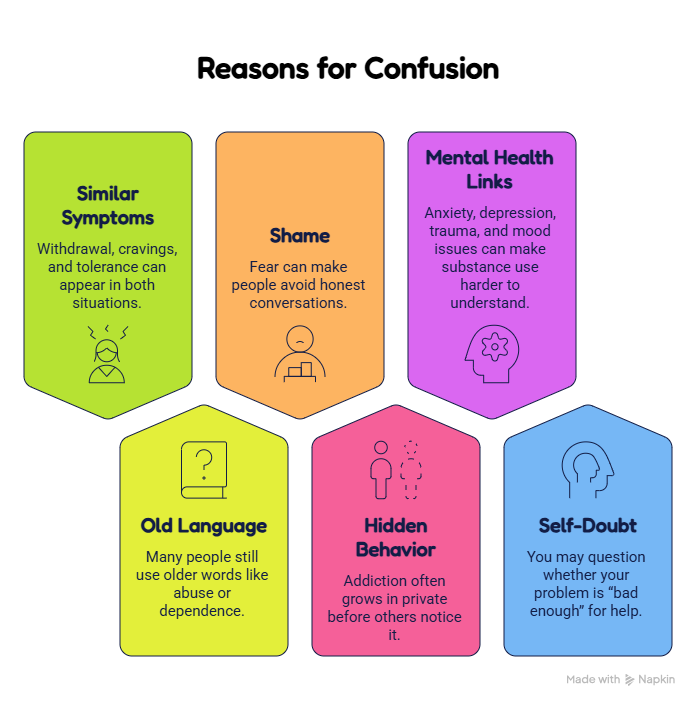
Key reasons people mix up these terms include:
- Similar Symptoms: Withdrawal, cravings, and tolerance can appear in both situations.
- Old Language: Many people still use older words like abuse or dependence.
- Shame: Fear can make people avoid honest conversations.
- Hidden Behavior: Addiction often grows in private before others notice it.
- Mental Health Links: Anxiety, depression, trauma, and mood issues can make substance use harder to understand.
- Self-Doubt: You may question whether your problem is “bad enough” for help.
You deserve clear answers without judgment. At Perimetertx, we look at the full picture, including your symptoms, stress, mental health, and daily function. That helps us guide you toward the right level of support.
When Should You Get Help for Signs of Addiction or Dependence?
You should get help when substance use starts affecting your peace, safety, health, or relationships. You do not need a severe crisis to talk with a professional. In fact, early support often makes recovery feel less overwhelming. If you notice signs of addiction, such as hiding use, losing control, or using despite harm, it may be time to reach out. If you notice signs of dependence, such as withdrawal or needing more to feel normal, support also matters. We often see people wait because they think they should fix it alone. From our experience, that delay can make symptoms harder to manage.
Perimetertx offers mental health and outpatient support options in Atlanta, including Partial Hospitalization Program, Intensive Outpatient Program, and Outpatient Program care. These programs can help you build structure, learn coping skills, and understand the emotional side of substance use concerns. If you also struggle with anxiety, depression, PTSD, mood swings, or anger, our mental health services can support those needs as part of your care plan.
FAQs About Addiction vs Dependence
1. What is the main difference between addiction and dependence?
Dependence usually means your body has adapted to a substance, which can cause withdrawal or tolerance. Addiction often includes loss of control, cravings, and continued use despite harm. Both concerns deserve care, but they may need different support.
2. Can you be dependent without being addicted?
Yes, you can have physical dependence without addiction. This may happen when your body adjusts to certain substances or medications over time. A professional can help you understand whether your symptoms involve dependence, addiction, or both.
3. What are common alcohol dependence symptoms?
Alcohol dependence symptoms may include shaking, sweating, nausea, sleep problems, anxiety, and strong urges to drink. You may also need more alcohol to feel the same effect. If symptoms feel intense, seek medical guidance because alcohol withdrawal can become unsafe.
4. What are common substance use disorder symptoms?
Substance use disorder symptoms may include cravings, failed attempts to stop, risky use, relationship problems, and neglecting duties. You may keep using even after it affects your health, work, or family. A proper assessment can help you understand the severity.
5. When should I contact a treatment center?
You should contact a treatment center when substance use feels hard to control or affects your daily life. You should also reach out if withdrawal, cravings, anxiety, depression, or trauma make things worse. Support can help you plan safer next steps.
Take the Next Step With Perimetertx in Atlanta
Understanding The Difference Between addiction vs dependence can help you stop blaming yourself and start making a plan. You may feel scared, but you do not have to sort everything out alone. We listen first, explain your options clearly, and help you choose care that fits your needs.
If you or someone you love needs support in Atlanta, contact Perimetertx today. We can help you explore outpatient care, mental health treatment, and the next safe step forward. Call 404-383-7826 or email help@perimeterdetox.com to speak with our team. Phone: 404-383-7826 Email: help@perimeterdetox.com Location: Atlanta, GA, United States