

A Trauma intensive outpatient program gives you structured care without full-time residential treatment. You can receive therapy, coping support, and recovery guidance while staying connected to daily life. A trauma IOP program may help when trauma symptoms affect your mood, sleep, work, or relationships. We focus on safety, trust, and practical skills that support steady healing. At Perimetertx, we help you find the right level of trauma support in Atlanta.
What Is a Trauma Intensive Outpatient Program?
A Trauma intensive outpatient program offers focused mental health care for people who need more than weekly therapy. You may still live at home, but you attend structured sessions several days a week. This level of care can help when trauma affects your emotions, routines, relationships, or sense of safety. Medicare describes intensive outpatient programs as care between weekly outpatient therapy and higher levels like inpatient or partial hospitalization care.
A trauma outpatient program can support you when trauma symptoms feel heavy, but you do not need 24-hour care. You may deal with flashbacks, stress reactions, mood changes, avoidance, or emotional numbness. NIMH explains that PTSD symptoms can interfere with work, relationships, and daily life when they continue after trauma. We help you understand those patterns and build safer ways to respond.
How a Trauma IOP Program Supports Real Healing
A trauma IOP program gives you space to work on trauma while keeping daily responsibilities. You may still care for family, attend school, manage work, or rebuild routines. The goal is not to rush healing. The goal is to give you structure, safety, and skills.
In our experience, many people seek help when they feel stuck between “I am functioning” and “I am not okay.” That middle place can feel lonely. A trauma therapy IOP can help you receive stronger support before symptoms grow worse.
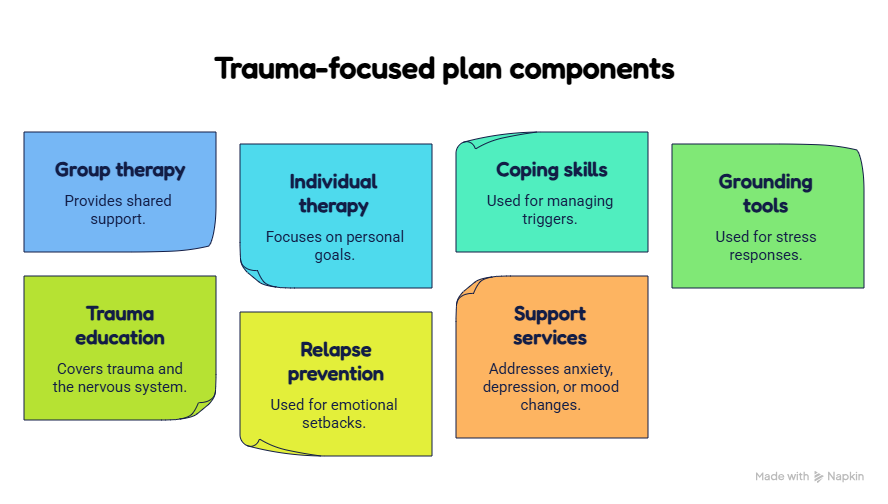
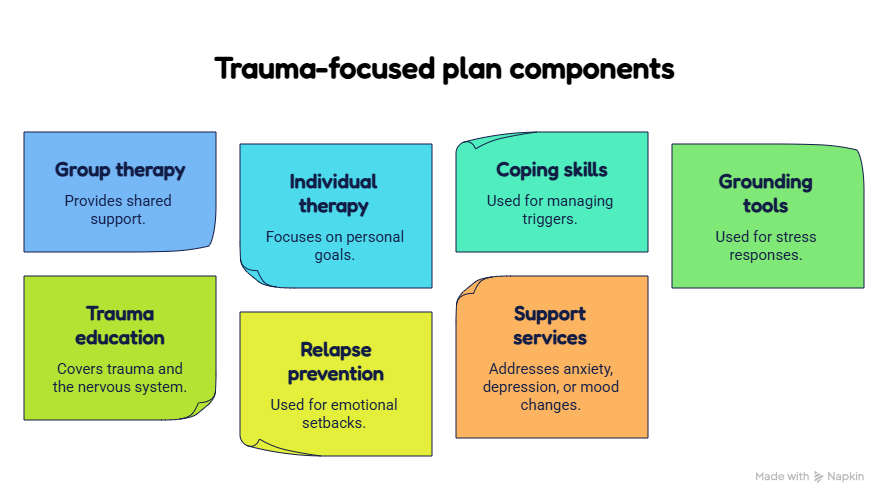
A trauma-focused plan may include:
- Group therapy for shared support
- Individual therapy for personal goals
- Coping skills for triggers
- Grounding tools for stress responses
- Education about trauma and the nervous system
- Relapse prevention for emotional setbacks
- Support for anxiety, depression, or mood changes
A strong trauma counseling program should also respect your pace. SAMHSA highlights safety, trust, peer support, collaboration, empowerment, and cultural awareness as key trauma-informed principles. That matters because you need care that feels respectful, not forced.
Trauma Therapy IOP vs Weekly Outpatient Therapy
A trauma therapy IOP gives you more structure than standard weekly therapy. You may need this support when trauma symptoms disrupt daily life often. Weekly therapy can help, but it may not feel enough during intense emotional seasons.
A trauma focused therapy program may also help you practice skills more often. That matters when your body reacts before your mind can slow down. You may know you are safe, yet still feel overwhelmed. Trauma therapy helps you close that gap with guided support.
You do not need to prove that your pain is “serious enough.” If trauma affects your sleep, relationships, choices, or peace, you deserve help.
| Care Option | Best Fit |
| Weekly outpatient therapy | You need regular support with mild or stable symptoms |
| Trauma intensive outpatient program | You need structured therapy several days weekly |
| PHP care | You need more daytime support than IOP |
| Residential or inpatient care | You need 24-hour monitoring or safety support |
At Perimetertx, we help you explore the right fit. You can also review our Intensive Outpatient Program and Outpatient Program pages.
Benefits of Intensive Outpatient Trauma Therapy
Intensive outpatient trauma therapy can help you work through trauma with more consistency. You do not have to wait a full week between sessions when symptoms feel active. You receive repeated support, which can help you apply skills faster in real life.
NIMH notes that psychotherapy for PTSD often helps people identify triggers and manage symptoms. It may include approaches such as exposure therapy and cognitive restructuring. Your care team may use trauma-informed methods that match your needs and readiness.
A supportive program may help you:
- Understand trauma triggers
- Reduce avoidance patterns
- Manage anxiety and stress responses
- Improve emotional control
- Rebuild trust in yourself
- Strengthen daily coping skills
- Address trauma-related mood changes
- Create a plan for setbacks
The Benefits of trauma therapy for PTSD often come from learning what happens inside your mind and body. Once you understand your reactions, you can respond with more control. Healing does not mean forgetting what happened. It means gaining support, safety, and healthier choices. You can also explore our PTSD & Trauma Therapy page if trauma affects your daily life.
Who May Need a Trauma Focused Therapy Program?
A trauma focused therapy program may help if your symptoms feel too strong for weekly care. You may feel anxious, disconnected, irritable, ashamed, or emotionally exhausted. You may also avoid places, people, or conversations that remind you of painful events.
You may benefit from a trauma counseling program if trauma affects your relationships, work, sleep, or recovery. You may also need added support if you live with depression, anxiety, anger, or mood changes. At Perimetertx, we look at your full picture. We do not treat you like a diagnosis. We help you build a plan that fits your life.
FAQs About Trauma Intensive Outpatient Program
- What is a trauma intensive outpatient program?
A Trauma intensive outpatient program provides structured therapy while you live at home. You attend treatment several days a week. It can help when trauma symptoms need more support than weekly therapy. - Is trauma IOP program the same as inpatient care?
No. A trauma IOP program does not require you to stay overnight. Inpatient care provides 24-hour support, while IOP offers structured daytime or evening treatment. - Can trauma therapy IOP help with PTSD?
A trauma therapy IOP may help you manage PTSD symptoms through therapy, education, and coping skills. NIMH notes that PTSD-focused psychotherapy can help people identify triggers and manage symptoms. - Who is intensive outpatient trauma therapy for?
Intensive outpatient trauma therapy may fit you if trauma affects your daily life, but you do not need 24-hour care. It can also help as a step-down after higher treatment. - What happens in a trauma counseling program?
A trauma counseling program may include individual therapy, group support, coping skills, and trauma education. Your care should move at a pace that feels safe and useful.
Get Trauma Support at Perimetertx
You do not have to carry trauma alone. At Perimetertx, we help you explore support that fits your needs, schedule, and symptoms. We offer structured mental health programs in Atlanta, including IOP, PHP, and OP care.
If you need a Trauma intensive outpatient program, contact Perimetertx today. We can help you take the next step with care and respect. Call 404-383-7826 or email help@perimeterdetox.com. You can also visit our Contact Us page to ask about support.